
U.S. Soccer’s Pathways Strategy responds to a long-standing challenge in American soccer: a fragmented system that is confusing for families, inefficient for clubs, and increasingly costly for participants. Today’s landscape includes overlapping leagues, inconsistent standards, and disconnected competition structures—often shaped by organizations with competing interests. The result has been higher costs, uneven player experiences, and limited connection to schools, communities, and local partners.
The future state envisioned by U.S. Soccer is a coherent, nationally aligned pathway that serves players of all ages, abilities, and ambitions. This model is grounded in clearly recognized divisions of play, consistent national standards, integrated competition architecture, and highly accessible programming. At the center of this system is the State Youth Soccer Association, which serves as the essential link between national governance and local delivery.
How the Pathways Strategy Relates to State Youth Soccer Associations
State Youth Soccer Associations are uniquely positioned to bring this vision to life. As direct members of both U.S. Soccer and US Youth Soccer, state associations are the only entities that consistently connect national strategy with grassroots implementation. This dual affiliation enables state associations to align competition structures, player development models, and administrative systems in ways that directly benefit their member organizations.
The Pathways Strategy’s focus on reducing redundancy, improving clarity, and modernizing competition aligns directly with the core responsibilities of state associations. By organizing leagues, enforcing standards, and coordinating programs across recreational, competitive, and pre-professional levels, state associations help ensure that clubs are not forced to navigate conflicting systems or incur unnecessary costs.
Value to Member Organizations (Clubs and Leagues)
For clubs and leagues, affiliation through a State Youth Soccer Association delivers clear and tangible value:
- Clarity and Credibility: Clubs compete within nationally recognized divisions of play aligned with U.S. Soccer’s framework, reducing confusion about league purpose and competitive intent.
- Consistent Standards: Coaching education, referee development, player safety, and competition rules are applied uniformly, strengthening trust and improving the overall participant experience.
- Reduced Cost and Complexity: Integrated league structures and shared services help reduce administrative burden, excessive travel, and duplicated fees.
- Access and Inclusion: State associations are positioned to support free or low-cost programming, community partnerships, and school-based initiatives that expand participation.
- Pathway Connectivity: Players can move between recreational, competitive, and advanced environments without leaving the system or losing eligibility.
The Importance of Cooperation Across the Soccer Ecosystem
The long-term success of U.S. Soccer’s Pathways Strategy depends on deliberate cooperation among U.S. Soccer, US Youth Soccer, US Club Soccer, and State Youth Soccer Associations. Each organization serves a distinct and valuable role, and alignment across these entities is essential to delivering clear pathways, consistent standards, and sustainable growth.
U.S. Soccer provides national governance, strategic direction, and alignment with the global game. US Youth Soccer and US Club Soccer contribute scale, competitive opportunities, and program expertise across multiple segments of youth participation. State Youth Soccer Associations function as the critical integrators, translating national vision into locally delivered programs, ensuring accountability, and maintaining accessibility for communities, clubs, and families.
When these organizations work in partnership rather than in isolation, the system benefits from reduced duplication, aligned incentives, and a shared focus on player-centered outcomes.
Cooperation enables integrated competition structures, consistent expectations, and more efficient use of resources, ensuring that the sport grows in a way that prioritizes participation, development, safety, and long-term engagement.
The Role of All Youth Soccer Organizations in a Shared Vision
A truly unified and effective soccer ecosystem also requires the engagement of all youth soccer organizations, including those that may not be structured as traditional nonprofit, membership-based entities or whose primary focus has not historically been player development. Regardless of business model or organizational mission, every entity operating within the youth soccer landscape influences the player experience and the perception of the sport.
U.S. Soccer’s vision for the future depends on these organizations choosing collaboration over isolation and alignment over fragmentation. By participating in shared standards, transparent governance, and integrated competition structures, all providers—nonprofit and for-profit alike—can contribute to a system that prioritizes player welfare, clarity for families, and sustainable growth for the game.
Adapting State Associations for a New Era of Cooperation
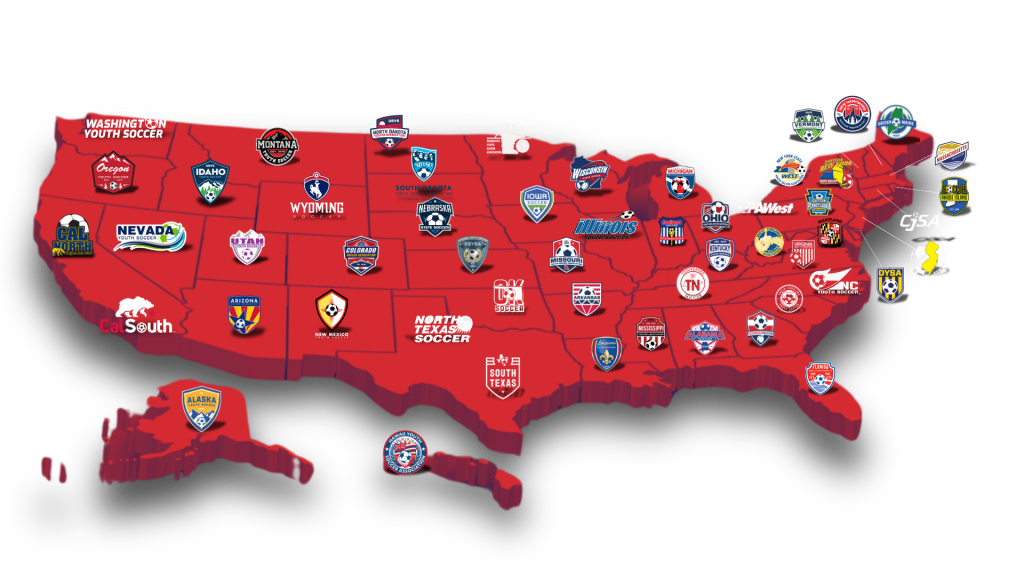
It is also important to recognize that State Youth Soccer Associations vary significantly from state to state in size, structure, resources, competitive environments, and historical approaches to governance and service delivery. These differences reflect the unique needs of local communities and have played an important role in the growth of the game.
At the same time, achieving a truly integrated and nationally aligned soccer ecosystem will require state associations themselves to evolve. To lead in a new era of soccer development and cooperation, State Youth Soccer Associations must be willing to adapt their structures, align their practices with national strategy, and embrace collaboration across organizational boundaries. By doing so, state associations can preserve local flexibility while contributing to a unified system that better serves players, families, clubs, and the broader soccer community.
Thank you on behalf of Missouri Youth Soccer for your contribution to the game of soccer, we hope that you will be patient as the challenges and opportunities of a Unified Soccer Pathway are reviewed, developed and implemented not only in Missouri but across the United States.
Information will be distributed on a regular basis as the Pathway is built and we will keep you updated on the progress.
Sincerely,
The Staff and Board of Missouri Youth Soccer