
• Skip to main content
  • Skip to primary navigation
  • Login
  • Registrar Onboarding
  • Link your Club Website to MYSA!
Missouri Youth Soccer Association

Missouri Youth Soccer Association

  • About MYSA
    • Contact Us
      • Inquiry Form
    • Club Locator
    • Board of Directors
    • Calendar
    • News
    • AGM
      • Grants
    • Partners
      • Missouri Referee Dev.
      • Soccer Parenting
      • Young Athlete Center
  • Administration
    • Forms & Downloads
    • Request COI
    • SafeSport
    • Tryout Dates & Guidelines
    • Futsal
  • Competitions
    • Sanctioned Club Tournaments
    • Missouri State Cup
    • Missouri Presidents Cup
    • National 1 League
  • Recreational
    • Player Development Curriculum
    • TOPSoccer
    • Membership Benefits
  • Coaching
    • Coaching Requirements
    • Coaching Courses
    • Coaching Education Resources
      • Missouri College Soccer Programs
  • Missouri ODP
    • What is the ODP?
    • ODP Events
    • ODP REGISTRATION 2026/27 CYCLE
      • 2026/2027 Coaching Staff
      • 26/27 ODP Master Schedule
      • Fall Tour 2026
  • Media
    • Tournament Photos
    • Gallery
    • Goal Submission Form
    • Login
    • Registrar Onboarding
    • Link your Club Website to MYSA!
Home US Soccer

US Soccer

Updates to the Grassroots & D Licenses Coming in 2027

US Soccer

Beginning in January 2027, U.S. Soccer will introduce new Player Development Courses and a redesigned D Course as part of our ongoing commitment to supporting coaches and improving player development across the country. The Player Development Courses are replacing the current online and in-person Grassroots courses (GR 4v4, GR 7v7, GR 9v9, and GR 11v11). 

These updates reflect our player-centered approach to Coaching Education. We want to provide coaches with learning opportunities that are relevant to the players they work with, connected to their coaching environment and supportive of their continued development.

New Player Development Courses

Our new Player Development Courses will focus on understanding and supporting players at different stages of development, moving from courses organized by game format to courses organized by age group: 

  • U6/U8
  • U10/U12
  • U14/U16

Each course combines approximately one hour of self-paced online learning with a two to three hour in-person field experience hosted by a U.S. Soccer Education Provider.
Coaches can also complete the online modules independently. This flexible approach allows coaches to explore the needs of players at different ages and connect their learning to what happens on the field.

A Redesigned D Course

The updated D Course will build on the foundation established through the Player Development Courses, helping coaches further develop their ability to plan, deliver, reflect on, and adapt their coaching practice.

The course will take place over approximately one month and include two in-person weekends, providing opportunities to learn, apply new ideas, and receive feedback.

To enter the redesigned D Course, coaches will need to complete one full Player Development Course (online module and in-person experience), along with the online modules for the other two age groups.

What does this mean for you?

Whether you are beginning your coaching journey or looking to continue developing your practice, these changes are intended to make learning more relevant, accessible, and connected to the needs of your players.

Our goal is to help coaches better understand their players, make informed coaching decisions, and create environments that support learning and development.

What’s next?

The updated courses will launch in January 2027, with registration opportunities available through State Associations and other U.S. Soccer Education Providers.

We will share more information as we approach the launch. In the meantime, you can explore our FAQs and visit the U.S. Soccer Learning Center to learn more.

  • Player Development and D Course General FAQs

  • The Redesigned D Couse FAQs

Thank you for the time, energy, and commitment you bring to your players and teams.
Your role in creating positive learning experiences is essential to the development of soccer across our country.
The US Soccer Local Strategy

US Soccer

Our generational ambitions depend on what happens in local communities: more people playing, more affordable opportunities, better experiences, and stronger development of players, coaches, and referees. Achieving that at scale requires us to connect national resources with local expertise so every community has more support to grow soccer. We are building a network of local offices to make that possible and sustain it for generations.

The local strategy at a glance

Why this matters. Our ambitions depend on more people playing, more affordable opportunities, better experiences, and stronger development in local communities. Major tournaments (World Cups, Olympics) and thriving professional leagues create an opportunity to turn interest into lasting growth.

What we are building. A national network of U.S. Soccer local offices, with State Association integration as the preferred foundation. Integration connects staff, budgets, services, and accountability within one organization, serving soccer across affiliations.

Who will make it work. Experienced local office teams, supported by U.S. Soccer’s national and regional expertise, working with clubs, leagues, schools, parks, and community providers. State Soccer Councils will help shape priorities, build partnerships, and review progress; U.S. Soccer will hold operating responsibility.

The intended impact. Reduce duplicated administrative costs and unnecessary travel, expand affordable programs and field access, strengthen development, and attract public, philanthropic, and commercial investment. The goal is for families to carry less of the cost and for local soccer organizations to thrive.

Progress already underway. USYS integration is creating a stronger connection with State Associations. This step creates a foundation for better local support; results must be demonstrated through delivery.

What happens next. Joint operating design, diligence, member engagement, necessary agreements and approvals, and phased implementation based on each state’s circumstances and readiness. Success will be measured through participation, actual family costs, experiences, development, investment, and organizational health.

Our generational ambitions depend on stronger local soccer

The American soccer community helped establish three overarching ambitions for generations to come.

U.S. Soccer Everywhere

Make soccer the number one played sport in every community in across America.

U.S. Soccer Is Yours

Ensure everyone feels ownership of soccer’s future in the United States.

U.S. Soccer Success

Win major tournaments,
including World Cups.


Achieving these ambitions means reaching beyond today’s affiliated soccer footprint. Families need accessible places to play. Clubs and leagues need support to deliver better experiences. Coaches and referees need development opportunities. Schools, parks, and community organizations need partners who can help them offer soccer. Local offices will bring these efforts together and help more people benefit from the game.

National capabilities need local delivery

National technical guidance, technology, partnerships, fundraising, and programs need people who can apply them locally. School soccer requires school district relationships; field access requires work with municipalities; player development requires sustained engagement with clubs, coaches, and competition operators. Local office teams will bring those partners together and be accountable for progress across the soccer community.

Why we are building now

World Cups, the Olympics, and thriving professional leagues create opportunities to attract participants, fans, volunteers, and investment. Lasting benefits depend on local programs, people, and places to play. Building that capacity now will help turn national attention into sustained participation and investment.

Building on progress already underway

USYS integration. The integration underway is strengthening the connection between U.S. Soccer and State Associations, creating the opportunity to develop cups, talent identification, and local support together.

This step reflects members working together toward a more connected system. The next measure of progress is what that cooperation delivers for local organizations and participants.


01

The soccer outcomes we will drive locally

Local offices will focus on helping more people begin and keep playing, making participation more affordable, improving experiences, and strengthening development. They will work with clubs, leagues, schools, and other providers / programmers (e.g., AYSO, SAY) to deliver these outcomes. The model should be judged by the improvements participants and communities experience.

More opportunities to begin and keep playing

Schools, parks, and neighborhood organizations can make soccer easier to try. Local office teams will help connect those institutions with clubs and other providers, recruit coaches, and assemble resources for sustainable programs. The ambition includes elementary and middle school soccer, recreational opportunities for teenagers, and flexible adult formats. People should be able to continue playing as their interests and circumstances change.

More affordable participation

We aim to make soccer more affordable by changing how we fund and deliver the game:

Lower the cost of running soccer. Share technology, registration, insurance, and administrative support to reduce duplicated costs and put more resources toward playing.

Bring more money into the game. Combine U.S. Soccer’s reach with local relationships to attract philanthropic, commercial, and public investment, reducing reliance on participant fees.

Create more affordable places to play. Partner with schools, parks, and community organizations to expand low-cost programs and access to fields close to home.

Reduce travel costs. Coordinate competition across organizations and state borders to create more practical local and regional playing opportunities.

Our goal – families carry less of the cost, and more people can play. We will measure whether these changes reduce families’ actual costs and expand affordable options.

Safer and more positive experiences

Local support can help organizations put national guidance into practice through coaching education, safeguarding resources, appropriate playing formats, and feedback from participants. We will support volunteers, protect referees from abuse, and help providers address the reasons people leave. Recruiting participants matters, and so does making them want to return.

Stronger development pathways

Local technical coverage will connect national expertise with coaching, competition, talent identification, and referee development. Working across clubs, schools, colleges, and professional organizations can help identify gaps and connect players to appropriate opportunities. Better competition should provide suitable challenges with less unnecessary travel.

We also intend to strengthen the economics of development so organizations benefit from helping players progress. The objective is a system that develops more world-class players while improving the experience for recreational and competitive participants alike.

A stronger connection to the sport

Local office teams can connect youth and adult soccer with professional clubs, national teams, and community events. A national team match or major tournament can become an opportunity for ongoing play, volunteering, and fandom. Stronger engagement can create commercial and philanthropic resources for reinvestment, where deliberate partnerships and funding arrangements connect that value back to soccer.

02

Why state integration is the preferred approach

State Associations have spent decades building soccer through experienced staff, volunteers, programs, and relationships. Integration builds on those strengths while creating the ability to coordinate people, resources, and delivery within one accountable organization.

Combine existing local strengths with national support

Building new local operations would require U.S. Soccer to recruit people, establish trust, and recreate relationships. Integrating states brings established teams into the network with access to technical expertise, technology, fundraising, professional partnerships, and specialized support.

Shared services and partnerships remain important. Integration also enables common priorities, funded responsibilities, and coordinated staffing. Expanding school soccer, for example, requires education partners, coaches, clubs, funding, safeguarding, and facilities to work together.

Fund the broader mission

Today, State Associations generally depend on revenue from designated affiliated activities. A child playing through an unaffiliated school program can advance our participation goal without generating revenue for the association. That can make it difficult to fund work that benefits soccer beyond the existing registration base.

Under the integrated model, local responsibilities and funding arrangements will support broader outcomes: participation, experience, development, and investment throughout the geography. Local office teams should be able to support school soccer, adult programs, and community recreation because they grow the game. We must also work with independent clubs and leagues to make those opportunities financially sustainable for them.

Expand the opportunity for every type of state

For states with limited resources, integration can provide specialist support and reduce the administrative demands on small teams. Local staff can spend more time supporting clubs, developing partnerships, and growing soccer.

For successful, financially healthy states, the opportunity is to accomplish more. National fundraising, public investment expertise, facilities financing, and professional relationships can extend their reach. Their strongest programs and practices can also help improve soccer elsewhere. Integration should amplify those strengths and give their people broader opportunities to contribute.

Continue building a network that serves everyone

U.S. Soccer is moving forward with local operating capacity across the country. We will develop it with states that integrate and establish direct local resources where needed. We will continue working with independent organizations throughout the ecosystem. Local office teams will serve the broader soccer community across affiliations.

03

More resources and stronger local leadership

The economic opportunity extends beyond U.S. Soccer’s budget. Local offices can help attract outside investment, use existing spending more effectively, and strengthen the organizations that deliver the game.

Connect national resources to local opportunities

Local office teams can identify a school district ready to expand soccer, underused municipal fields, or a club facilities project. National specialists can help develop those opportunities through program design, fundraising, financing, and implementation.

Potential sources include public funding and facility access, philanthropy, commercial partnerships, professional club investment, and appropriate private financing. Facilities projects need sustainable operating models and financing suited to their economics. Affordability and financial risk must inform those decisions.

The value should reach local organizations: stronger participation and retention can improve club finances, better field access can lower costs, and professional partnerships can support coaching and community programs. Delivery arrangements must work for the organizations involved.

Give local people greater capacity and opportunity

Existing state staff bring knowledge and relationships essential to the network. We intend to give them stronger professional support, access to specialists, and broader career opportunities. Some may lead expanded local work; others may specialize or contribute regionally or nationally. People should also have opportunities to build long-term careers in their own communities.

We expect the workforce focused on local soccer outcomes to grow over time, including additional expertise in community development, public partnerships, technology, fundraising, and facilities.

Coaches, referees, and volunteers across the sport will also need recruitment, education, mentorship, and support.

Organize around how soccer works locally

The structure should reflect geography and need. Large states may require multiple teams; smaller states may share expertise. Metropolitan areas crossing state lines need coordination. Every state should have accountable contacts across core responsibilities, while national and regional specialists support local execution.

Give State Soccer Councils a substantive role

Councils will help shape state priorities, review progress, mobilize relationships, and inform investment. They can connect local office teams with soccer leaders, schools, businesses, public institutions, and other community partners. U.S. Soccer management will remain responsible for operations and execution. Formal council authorities and decision rights will be established through the framework and relevant agreements. Local leadership remains essential to understanding needs and advancing soccer throughout the state.

04

Accountability and the path forward

Success will be judged by improvements for participants, communities, and the organizations delivering soccer. Implementation must include clear measures, regular review, and continued learning.

Measure outcomes and learn from results

Connected scorecards at national, state, community, and organizational levels will link our shared ambitions to local priorities. State measures should reflect soccer across affiliations and playing environments. Club, league, school, and program measures should help organizations improve.

The measures should cover:

Participation and retention

Coaching and referee capacity

Resources Mobilized

Total family costs and affordable options

Player development and progression

Organizational financial health

Safety and satisfaction

Fandom and engagement

Soccer’s community benefits

Measurement should guide action. Councils can review progress and help identify where affordable programs, coaching support, or field access need additional attention.

Establish baselines and compare results across states with different operating arrangements, accounting for geography, resources, and investment. Distinguish the contribution of local offices from outcomes produced jointly with clubs, schools, municipalities, and other partners.

Economic measures should capture public investment, field access, and savings for families alongside Federation revenue. Track resources actually deployed, avoid double counting, and examine how efficiencies benefit participants or support reinvestment.

Build the foundation and implement over time

States have different circumstances and approval processes. Foundational operating design and diligence will establish the basis for agreements, followed by phased implementation with attention to readiness, continuity, and transition risks. Building alongside USYS integration allows national and local capabilities to develop together.

The strategic case explains why we are pursuing integration and what we intend the network to achieve. The terms for each transition must be established in the relevant documents. Governance and voting rights, assets and restricted funds, employment arrangements, liabilities, member approvals, local budget authority, and other contractual questions require specific answers. An MOU’s obligations must be understood from its actual language.

THE OPPORTUNITY

The opportunity for states is to help build a network that can accomplish more for their communities: support stronger soccer organizations, reach new participants, improve development, attract investment, and create rewarding opportunities for the people serving the game. The measure of success will be the results delivered over time.

ILLUSTRATIVE EXAMPLE

What a local office could make possible

Imagine a metropolitan area with strong interest in soccer, but too few affordable programs and fields. Clubs face high rental costs. Schools want to offer soccer but lack coaches and program support. A nearby professional club wants stronger community connections. A U.S. Soccer local office brings these opportunities together.

  1. Start with a shared community plan
    The local team brings clubs, schools, and public institutions together around participation, costs, and field needs. State Soccer Council members connect the team with community leaders and potential supporters.
  2. Turn existing resources into more places to play
    The school district provides field access. The municipality considers improvements and new infrastructure. Local staff coordinate relationships; national specialists support planning and financial analysis. Suitable projects can draw on public contributions, philanthropy, sponsorship, and appropriate financing.
  3. Build programs that strengthen local organizations
    Clubs become delivery partners for school and community soccer, gaining program opportunities and relationships with new families. The local team recruits and connects coaches and referees to the programs, supported by national education and technology. The professional club contributes expertise, community engagement, and potential commercial support. Some children continue through school programs; others join clubs. Both advance the mission. The local office has a funded responsibility to grow soccer across the community, and the partnerships should make delivery sustainable for the organizations involved.
  4. Connect national investment to local delivery
    U.S. Soccer’s philanthropic and commercial teams help identify funding partners. Existing local staff develop the opportunity, coordinate implementation, and demonstrate impact, supported by specialists.
  5. Show the value and build on it
    The team tracks participation, affordability, retention, field access, coach and referee capacity, investment, and satisfaction. It also monitors club financial health and engagement with professional soccer. The Council reviews progress and helps identify the next opportunities.

THE POTENTIAL RESULT

The potential result is more affordable soccer for families, stronger clubs, additional opportunities for coaches and referees, and greater investment in the community. A connected national and local organization makes it possible to pursue those outcomes together and repeat successful approaches elsewhere.

MYSA Supports Historic Integration of US Youth Soccer and U.S. Soccer

US Soccer
State Associations helped shape the decision, and will play and even larger role in creating new opportunities to strengthen soccer in communities across the country. Learn More

Today, Missouri Youth Soccer Association (MYSA) joined State Associations across the country in supporting a historic step to make US Youth Soccer (USYS) part of U.S. Soccer, bringing the organizations closer together to invest more in local soccer and create better experiences for players and families. creating greater alignment across the game and new opportunities to strengthen soccer locally. 

USYS State Associations voted to approve the change during their Annual General Meeting, which will begin a two-year integration process on September 1. The decision brings USYS’s decades of experience and reach across youth soccer closer together with U.S. Soccer’s resources and national scale. 

“This is an important step forward for youth soccer, both nationally and here in Missouri,” said Nik Bushell, Executive Director of Missouri Youth Soccer Association. “By creating greater alignment between US Youth Soccer, State Associations and U.S. Soccer, we have an opportunity to strengthen the support and resources available to our clubs, leagues, coaches, referees and families. Missouri has a strong soccer community, and we look forward to helping shape this next chapter while continuing to create opportunities for players at every level of the game.”

What This Means for Soccer in Missouri:

The integration begins a two-year process in which State Associations will work closely with U.S. Soccer and USYS to help shape the future of soccer in communities around the country. 

The goal is to create a stronger and more connected soccer system that can: 

  • Bring more resources and investment to soccer locally. 
  • Strengthen State Associations and their ability to support and grow the game in their communities. 
  • Create more opportunities for people to play and stay in the game. 
  • Better support clubs, leagues, coaches and referees serving players every day. 
  • Make soccer easier for families to understand and navigate. 
  • Connect local communities more directly to U.S. Soccer and the resources, expertise and opportunities available nationally. 

The integration is part of U.S. Soccer’s broader Pathways Strategy, which brings together members and stakeholders from across American soccer to create a more connected future for the game. For MYSA, that future starts locally building on the work already happening in our communities and creating the support, investment and opportunities to help soccer reach even more people across Missouri.


About U.S. Soccer
Founded in 1913, U.S. Soccer is the national governing body for soccer in the United States and a 501(c)(3) nonprofit organization. In service to soccer, U.S. Soccer works to grow the game at every level, from local communities to the world stage. The Federation oversees 27 National Teams, supports players, coaches, referees, and member organizations nationwide, and is committed to expanding access to the sport, strengthening pathways, and creating better environments for every participant. Through initiatives such as Soccer Forward, the U.S. Way, and the Arthur M. Blank U.S. Soccer National Training Center, U.S. Soccer is building the foundation for long-term success on and off the field. The Federation’s ambition is to help make soccer a leading sport in the United States and to build teams capable of consistently competing for and winning major international championships, including FIFA World Cups. For more information, visit ussoccer.com/ourvision. 

About USYS
US Youth Soccer, the largest youth sport organization in the country, is on a mission to provide world-class support, resources, and leadership, helping every member fulfill their goals on and off the field of play. US Youth Soccer registers nearly 2.7 million players annually. Through its programming, resources and leadership, US Youth Soccer is advancing the game for its 54 Member State Associations, 10,000 clubs and leagues and nearly 1 million administrators, coaches, and volunteers. US Youth Soccer connects families and communities to the power of sports and its shared love of soccer. US Youth Soccer provides a path for every player, offering programs that provide a fun, safe and healthy environment for players at every level of the game.

MYSA Elected as League Operator for National 1 League

US Soccer

National 1 League is the top team-based competition in US Club Soccer and US Youth Soccer, elevating teams across the country into a unified national platform integrated with the ECNL. The new event, formerly/temporarily referred to as “NewComp”, is the result of bringing together US Club Soccer’s National Premier Leagues and US Youth Soccer’s National League. Beginning with the 2026-27 season, the new league ushers in an era of collaboration in youth soccer that benefits players and families across the country.

National 1 League Regional Format

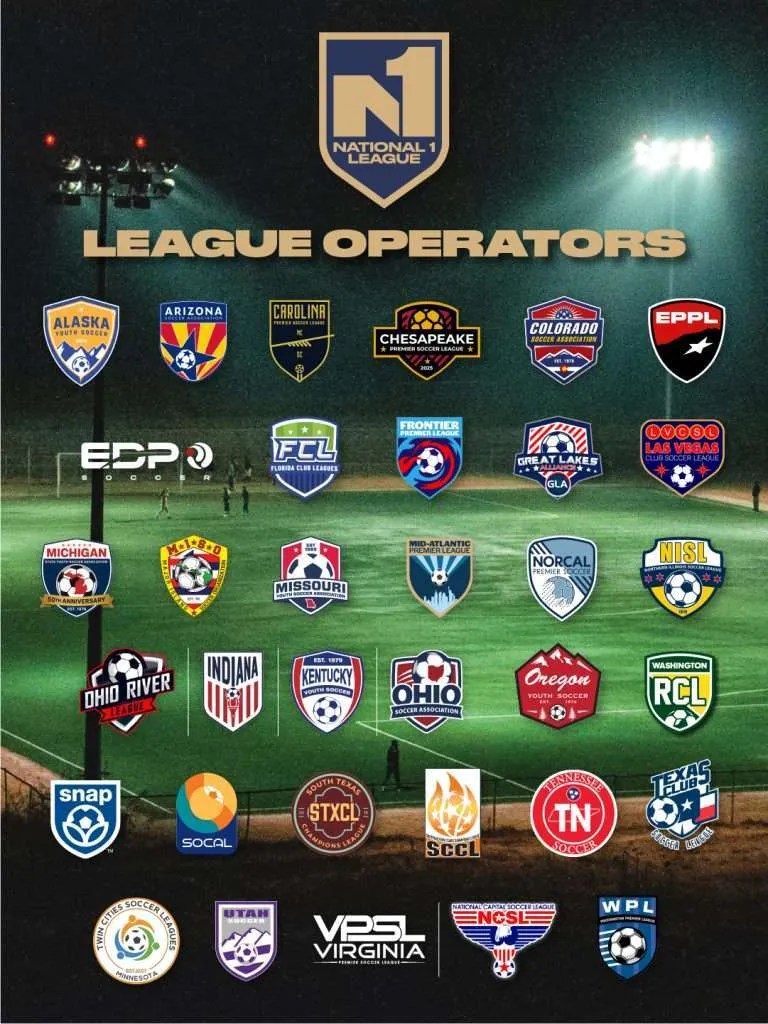
US Club Soccer and US Youth Soccer are proud to announce all league operators of its new competition, beginning with the 2026-27 season, that serves as the top team-based league of both organizations. This new league brings together the National Premier Leagues (NPL) and USYS National League (NL), ushering in a new era of collaboration in the youth soccer ecosystem and serving 10,000 teams and more than 150,000 players.

The competition’s inaugural season will be capped in summer 2027, as part of a postseason structure operated by the Elite Clubs National League (ECNL). The recently announced ECNL Conference League Playoffs will welcome the top-performing teams from this competition, along with selected ECNL Regional League (ECNL RL) teams.

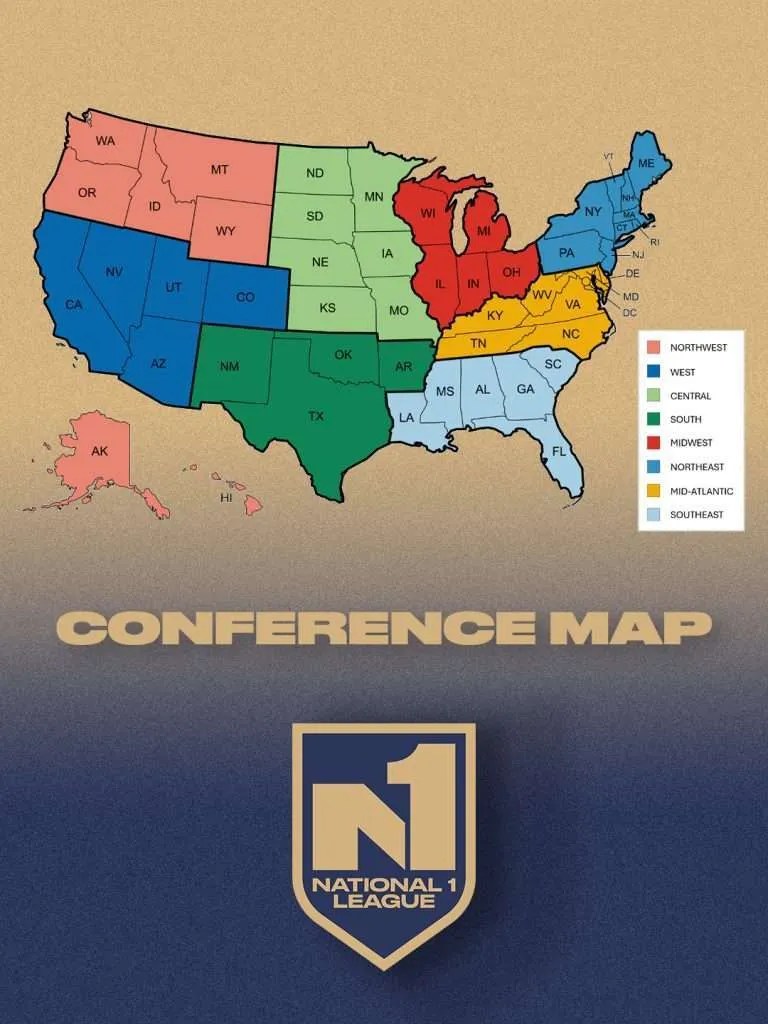
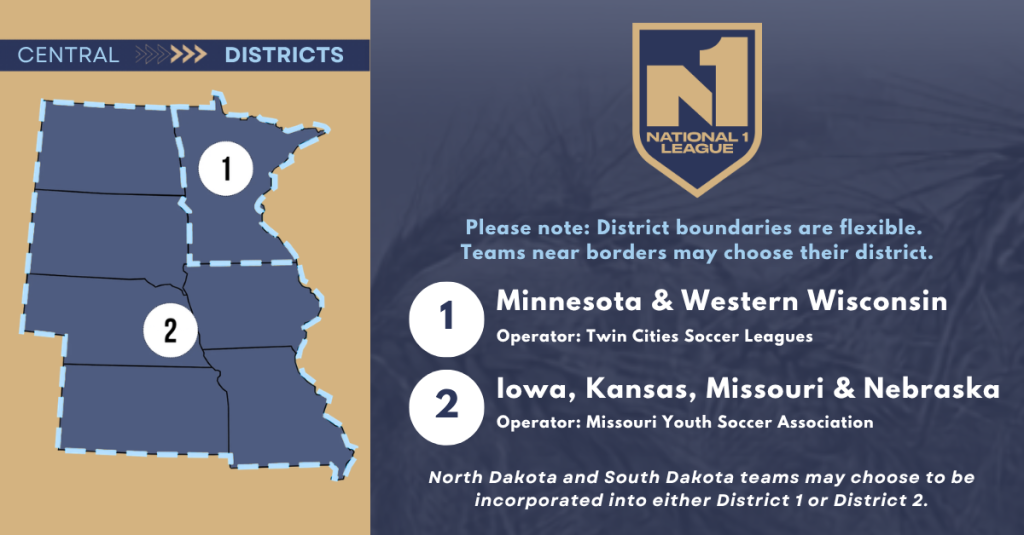
Eight conferences comprise the new competition with multiple districts in each conference and those districts advancing teams to the ECNL Conference League Playoffs. The complete list is now available here.

MYSA Announced as Central District 2 Operator

“National 1 League aligns with the broader goals of the U.S. Soccer Pathway Strategy. The work to connect pathways into National 1 League begins now,” said commissioner Marc Frankland. “Our team will partner with selected operators and the respective state associations across the country to develop district-level pathways that are more inclusive and easier for players and parents to understand. The goal is not to disrupt local leagues, but to connect them into a clearer national structure. This work will take time, but we are committed to building it thoughtfully. Access to National 1 League will not be tied to whether leagues, teams or players are registered with US Youth Soccer or US Club Soccer.” 

League operators were selected based on their commitment to access and inclusivity, quality competition and player-first decision-making across all districts. A breakdown of the conferences, league operators and districts is available here. By layering districts into each conference, the new competition reaches more players and reduces travel burdens for families. League operators will meet at the end of the month in Atlanta to collaborate further. Team registration opens next month. 

More information about the league, including FAQs, is available here. Information will be continually added / announced over the next several months as things develop. So stay tuned!


ABOUT ECNL

The ECNL is the nation’s leading youth soccer development platform for America’s top soccer players. The ECNL mission to provide the best youth sports experience in the world drives constant innovations in competitions and experiences for players, parents, families, coaches, referees, and partners. The ECNL has questioned convention and challenged the status quo of youth sport since 2009, pushing boundaries and striving for unmatched excellence. Together with its clubs and club leaders, the ECNL creates unforgettable memories and supports the development of youth players into college stars, professionals, world champions, and leaders. 


ABOUT US YOUTH SOCCER

US Youth Soccer, the largest youth sport organization in the country, is on a mission to provide world-class support, resources, and leadership, helping every member fulfill their goals on and off the field of play. US Youth Soccer registers 2.68 million players annually. Through its programming, resources and leadership, US Youth Soccer is advancing the game for its 54 Member State Associations, 10,000 clubs and leagues and one million administrators, coaches, and volunteers. US Youth Soccer connects families and communities to the power of sports and its shared love of soccer. US Youth Soccer provides a path for every player, coach and referee offering programs that provide a fun, safe and healthy environment at every level of the game. 


ABOUT US CLUB SOCCER

A National Association member of the U.S. Soccer Federation, US Club Soccer fosters the growth and development of soccer clubs in order to create the best possible environment for players of all ages.

Anchored by Players First and its pillars of Club Development, Coaching Development, Player Development, Referee Development, Parent Engagement and Player Health & Safety, US Club Soccer offers registration, league- and cup-based competition platforms, player identification and a variety of other programming, resources and services.

US Club Soccer is sponsored by Nike, DICK’S Sporting Goods, Gatorade and Siete Foods.

A Unified Soccer Pathway: Why State Youth Soccer Associations Matter

US Soccer

U.S. Soccer’s Pathways Strategy responds to a long-standing challenge in American soccer: a fragmented system that is confusing for families, inefficient for clubs, and increasingly costly for participants. Today’s landscape includes overlapping leagues, inconsistent standards, and disconnected competition structures—often shaped by organizations with competing interests. The result has been higher costs, uneven player experiences, and limited connection to schools, communities, and local partners.

The future state envisioned by U.S. Soccer is a coherent, nationally aligned pathway that serves players of all ages, abilities, and ambitions. This model is grounded in clearly recognized divisions of play, consistent national standards, integrated competition architecture, and highly accessible programming. At the center of this system is the State Youth Soccer Association, which serves as the essential link between national governance and local delivery.

How the Pathways Strategy Relates to State Youth Soccer Associations

State Youth Soccer Associations are uniquely positioned to bring this vision to life. As direct members of both U.S. Soccer and US Youth Soccer, state associations are the only entities that consistently connect national strategy with grassroots implementation. This dual affiliation enables state associations to align competition structures, player development models, and administrative systems in ways that directly benefit their member organizations.

The Pathways Strategy’s focus on reducing redundancy, improving clarity, and modernizing competition aligns directly with the core responsibilities of state associations. By organizing leagues, enforcing standards, and coordinating programs across recreational, competitive, and pre-professional levels, state associations help ensure that clubs are not forced to navigate conflicting systems or incur unnecessary costs.

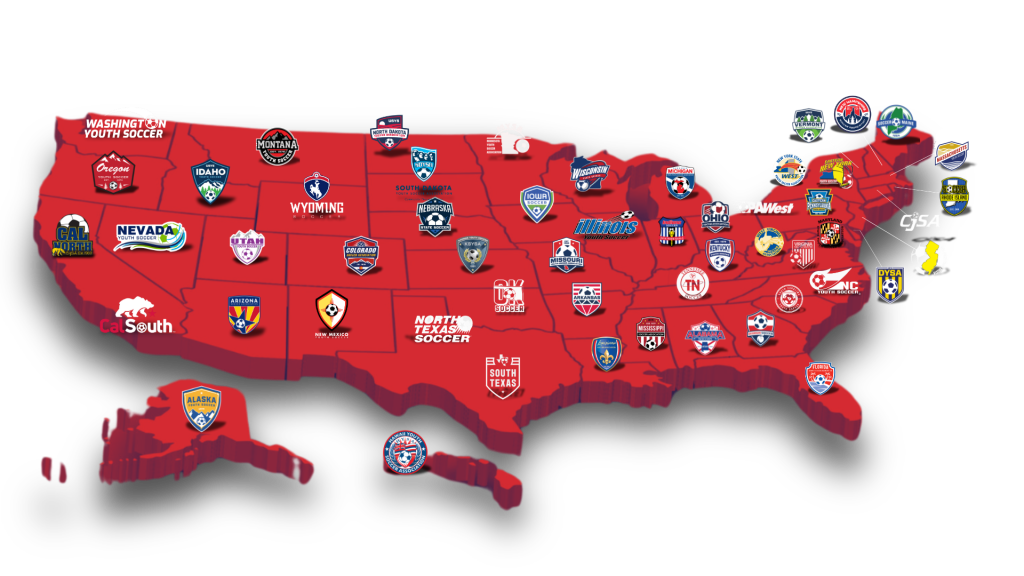
Map of all USYS State Associations

Value to Member Organizations (Clubs and Leagues)

For clubs and leagues, affiliation through a State Youth Soccer Association delivers clear and tangible value:

  • Clarity and Credibility: Clubs compete within nationally recognized divisions of play aligned with U.S. Soccer’s framework, reducing confusion about league purpose and competitive intent.
  • Consistent Standards: Coaching education, referee development, player safety, and competition rules are applied uniformly, strengthening trust and improving the overall participant experience.
  • Reduced Cost and Complexity: Integrated league structures and shared services help reduce administrative burden, excessive travel, and duplicated fees.
  • Access and Inclusion: State associations are positioned to support free or low-cost programming, community partnerships, and school-based initiatives that expand participation.
  • Pathway Connectivity: Players can move between recreational, competitive, and advanced environments without leaving the system or losing eligibility.

The Importance of Cooperation Across the Soccer Ecosystem

The long-term success of U.S. Soccer’s Pathways Strategy depends on deliberate cooperation among U.S. Soccer, US Youth Soccer, US Club Soccer, and State Youth Soccer Associations. Each organization serves a distinct and valuable role, and alignment across these entities is essential to delivering clear pathways, consistent standards, and sustainable growth.

U.S. Soccer provides national governance, strategic direction, and alignment with the global game. US Youth Soccer and US Club Soccer contribute scale, competitive opportunities, and program expertise across multiple segments of youth participation. State Youth Soccer Associations function as the critical integrators, translating national vision into locally delivered programs, ensuring accountability, and maintaining accessibility for communities, clubs, and families.

When these organizations work in partnership rather than in isolation, the system benefits from reduced duplication, aligned incentives, and a shared focus on player-centered outcomes.

Cooperation enables integrated competition structures, consistent expectations, and more efficient use of resources, ensuring that the sport grows in a way that prioritizes participation, development, safety, and long-term engagement.

The Role of All Youth Soccer Organizations in a Shared Vision

A truly unified and effective soccer ecosystem also requires the engagement of all youth soccer organizations, including those that may not be structured as traditional nonprofit, membership-based entities or whose primary focus has not historically been player development. Regardless of business model or organizational mission, every entity operating within the youth soccer landscape influences the player experience and the perception of the sport.

U.S. Soccer’s vision for the future depends on these organizations choosing collaboration over isolation and alignment over fragmentation. By participating in shared standards, transparent governance, and integrated competition structures, all providers—nonprofit and for-profit alike—can contribute to a system that prioritizes player welfare, clarity for families, and sustainable growth for the game.

Adapting State Associations for a New Era of Cooperation

It is also important to recognize that State Youth Soccer Associations vary significantly from state to state in size, structure, resources, competitive environments, and historical approaches to governance and service delivery. These differences reflect the unique needs of local communities and have played an important role in the growth of the game.

At the same time, achieving a truly integrated and nationally aligned soccer ecosystem will require state associations themselves to evolve. To lead in a new era of soccer development and cooperation, State Youth Soccer Associations must be willing to adapt their structures, align their practices with national strategy, and embrace collaboration across organizational boundaries. By doing so, state associations can preserve local flexibility while contributing to a unified system that better serves players, families, clubs, and the broader soccer community.

Thank you on behalf of Missouri Youth Soccer for your contribution to the game of soccer, we hope that you will be patient as the challenges and opportunities of a Unified Soccer Pathway are reviewed, developed and implemented not only in Missouri but across the United States.

Information will be distributed on a regular basis as the Pathway is built and we will keep you updated on the progress.

Sincerely,

The Staff and Board of Missouri Youth Soccer

Understanding the 2026-2027 Season Age Group Changes

US Soccer

Age groups are changing? …Again?

Following extensive review and discussion, US Youth Soccer, AYSO, and US Club Soccer have all made a collective decision. They will move to an age group player formation cycle that runs from August 1 to July 31. This change will start with the 2026/27 season/registration year. This change was based on additional critical feedback. It was also influenced by data and expert input. The goal is to better align players with their school-grade peers.

The August 1 to July 31 age group player formation cycle will be used for all USYS league and Cup competitions for the 2026-27 season/registration year. This includes the National Championship Series (State Cup), the Presidents Cup, National League / Midest Conference and the MADL. 

US Youth Soccer CEO Tom Condone addressed the adjustment to the registration process: “At US Youth Soccer, our mission is to support the development of every player. After careful collaboration with our partners and listening to our membership, we believe this shift to an August 1 player formation cycle better aligns with school calendars, supports social and individual needs, and ultimately enhances the youth soccer experience for families across the country.”

When does this change occur?

This change will be enacted at the start of the 2026-27 seasonal / registration year, beginning August 1st 2026.
This will NOT impact the current, 25/26 season which runs through July 2026.

How does this change impact Missouri Youth Soccer Association players?

The simplest way to summarize the upcoming change is that on August 1st, 2026:

  • Players born January 1st through July 31st will progress to the higher age group for the 26/27 season.
    Ex. Player born in April 2017;
    25/26 Season: U9
    26/27 Season: U10
  • Players born August 1st through December 31st will remain in the same age group for the 26/27 season.
    Ex. Player born in September 2017;
    25/26 Season: U9
    26/27 Season: U9

Will there be exemptions for players born near the end of the cycle?

Unfortunately, we can NOT make any exceptions to the newly imposed age groups. MYSA do not have the authority to do so.
These new age groups are uniformly enforced at the national level. This guarantees that all states use the same standards. 

Many players will be affected by the change in age groups. We have tried to give everyone plenty of time to make the necessary adjustments ahead of next season.

Teams are assigned to an age group based on the age of the team’s OLDEST player.
If you intend on keeping the majority of your team together through next season, please be prepared. Some players may then be required to play-up to a higher age group in order to keep their team together entirely.
However, MYSA roster rules prevent players from joining teams more than 2 age groups above their natural age.

New AGE MATRIX 26_27Download
  • Share on Mail (Opens in new window)Mail
  • Share on Facebook (Opens in new window)Facebook
  • Share on X (Opens in new window)X
  • Share on LinkedIn (Opens in new window)LinkedIn
  • Share using Native toolsShareCopied to clipboard

New Referee Abuse Prevention Policies

US Soccer
Respect The Call Image

Introducing Stronger Policy To Protect Our Referees

EFFECTIVE MARCH 2025

Join U.S. Soccer in creating a better future for our game. Our updated Referee Abuse Prevention Policy (Policy 531-9) is designed to make youth and amateur matches safer, more fun, and more empowering for everyone involved. Referee abuse will not be tolerated. We’re asking everyone to do their part by knowing the rules, reporting referee abuse, and embodying behaviors that represent the best of us.

STAY IN THE GAME! WATCH OUR POLICY VIDEO ABOVE TO MAKE SURE YOU KNOW THE RULES


The Policy

Clear Rules & Consequences For A Winning Experience

U.S. Soccer is standing firm to protect referees and restore respect to the game. The updated policy includes stronger sanctions for any form of physical or non-physical abuse towards referees. We encourage every player and coach to learn what behaviors cross the line, so they can avoid penalties and help create a better culture for the future of soccer.

Download our Complete Policy for the U.S. Soccer Version, or Customizable Version for adding your team or tournament logo.

Download U.S. Soccer Version

Download Custom Version


Key Takeaways

Everyone deserves the opportunity to experience soccer without risking his or her well-being. We must protect those in service to the game.

Both Physical and Non-Physical Abuse Have No Place In Our Game.

Suspensions will be for a number of games or time-based (or sometimes both) depending on severity and circumstance.

Players, coaches and spectators are all encouraged to report abuse.

Download our Penalties Summary and One-Sheeter for more information.

Download U.S. Soccer Version

Download One Sheeter


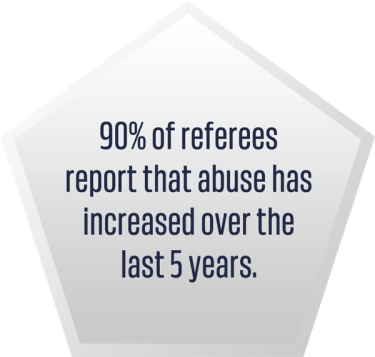
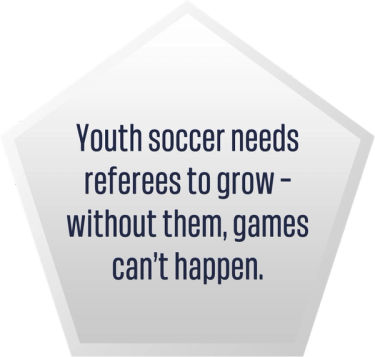
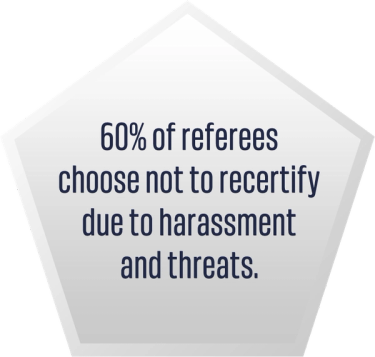
Did You Know

It’s Time To Bring Awareness To This Systemic Problem

Referee abuse is an issue that’s on the rise. We need more productive dialogue about what is happening, and how we can prevent it. The bright future of soccer depends on creating a safer, more inclusive environment, where no one ever feels that his or her well-being is at risk.

Image
Image
Image

We All Have a Role To Play

The game belongs to all of us. To ensure that soccer remains a positive experience for everyone, we need your help to stop referee abuse. Here’s how you can make a difference:

Coaches

Image

Lead by example. Set the tone for good sportsmanship with your players.

Players

Image

Respect your referees, whether you agree with their calls or not.

Parents & Spectators

Image

Cheer for your team, not against the referee. Help create a positive environment.

Referees

Image

Know that your voice matters. Report abuse and keep the game safe.

Find all toolkit assets here

Missouri Youth Soccer Association
  • Home
  • MYSA
  • Administration
  • Missouri ODP
  • Coaching
  • Staff Login
  • GotSport Onboarding
  • Link Your Club Website to MYSA!
Official State Association
Privacy Policy
This website is powered by SportsEngine's Sports Relationship Management (SRM) software, and is owned and subject to the Missouri Youth Soccer Association privacy policy.
Powered by SportsEngine